Click for Full Brochure - PDF | Specification Sheets Click Here
 BOILER ADVANTAGES | THERMAL SHOCK BUSTERS | TAKE-A-PART


Performance You can Trust  - Complete Brochure PDF!!

Firetube, Watertube, or Cast Iron?
Copper Fin, Bent Tube or Straight Tube?

Condensing or Non Condensing?

  Scale and Energy Loss
Rite Boiler - Choose the rite boilerThese are some of the decisions  faced when choosing a boiler.  Making an  intelligent choice starts with asking the right questions:  What are the basic differences?  What is the boiler's efficiency when new and more importantly - can this efficiency be maintained?  Which boiler will have the lowest operating cost and the longest service life and why?  

As the chart shows, this widely recognized problem has a devastating effect on boiler efficiency and operating costs.  No matter how impressive a new boiler's start-up efficiency is, scale can quickly knock it down - driving up fuel costs until major boiler repairs or replacement is unavoidable.  So, how easy is it to keep some common boiler designs clean and operating at peak efficiency year after year?  Lets take a look:

You'll find it's virtually impossible for a person to get inside a firetube boiler to clean out  scale.  Cast iron boilers offer no access.  The "U" bends in bent tube boilers not only create natural traps


Rite Boiler DurafinDid you know that some current designs go well back over a hundred years? Today's  firetube boilers, for example, are  descendants of old steam powered  locomotive boilers that once crisscrossed America.  As the industrial and commercial boiler markets grew in the early part of the 20th Century, one notable improvement over the firetube boiler was the bent tube boiler.  Because bent tubes could flex, they could withstand the "shock" of cold feedwater better than fire tubes.  But cold feed water created another problem for both these types of boilers: oxygen corrosion.  This helped popularize cast iron boilers which had better resistance to oxygen corrosion than steel.  However, cast iron's low tensile strength also limited its use primarily to low pressure commercial and residential applications.  Condensing boilers have become popular recently due to their high combustion efficiency when condensing.  They are worth considering for snowmelt, heat pump and other continuous low temperature requirements below 140º F but their longevity and the cleanability of their heat exchangers  should be examined before making such a large investment.

  for scale to collect, but compound this problem by keeping scale hidden from view as well.  And copper fintube manufacturers want an exact flow of 7 feet per second through their tubes to  protect them from scaling or eroding.  "Well" you ask, "Did anybody design a heavy-duty boiler with fast and effective waterside access?"

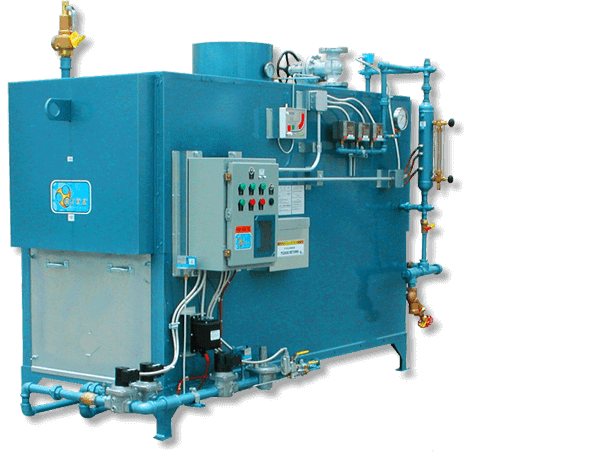
Rite Fire Tube BoilersToday many of the challenges that earlier boiler manufacturers faced no longer exist.  Steam traps and de-aerators have largely eliminated cold feedwater from "shocking" steam boilers.  The old "minimum square feet of heating surface" rule has shrunk from 10 square feet per boiler horsepower in 1900 to around 5 square feet.  And steam boilers themselves have been largely replaced by water heating boilers for comfort heat and many other industrial/process loads due to the advantage of closed systems over open (steam) systems.  But one very big problem for all boilers still remains: SCALE
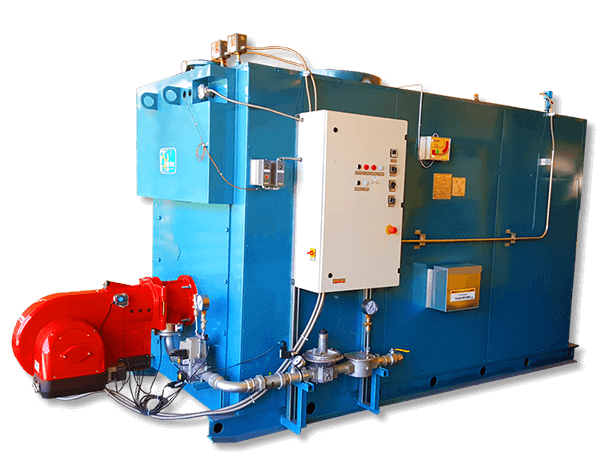
  Shortly after World War II, a new type of boiler appeared on the market.  With a heat exchanger consisting of two headers with removable endplates and a connecting bank of inclined "see-through" tubes, this boiler was designed to remove scale with ease.  The Horizontal Inclined Watertube Boiler. as it came to be called, proved to have many other advantages as well.

Rite Engineering began manufacturing this type of boiler in 1952.  Fifty years and over 25,000 boilers later, Rite is more dedicated than ever to engineering performance you can trust and efficiency you can maintain.


Click for Full Brochure - PDF Specification Sheets Click Here

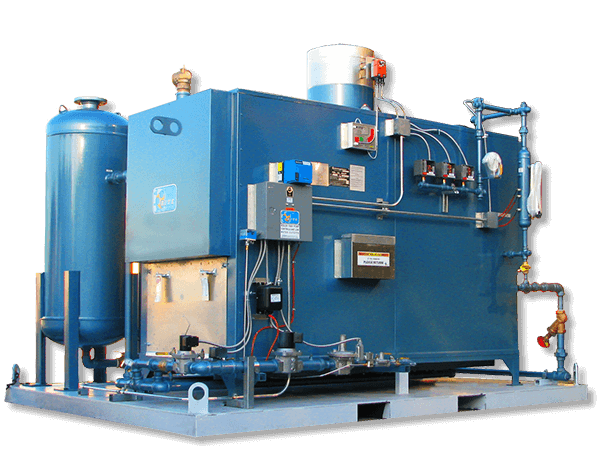
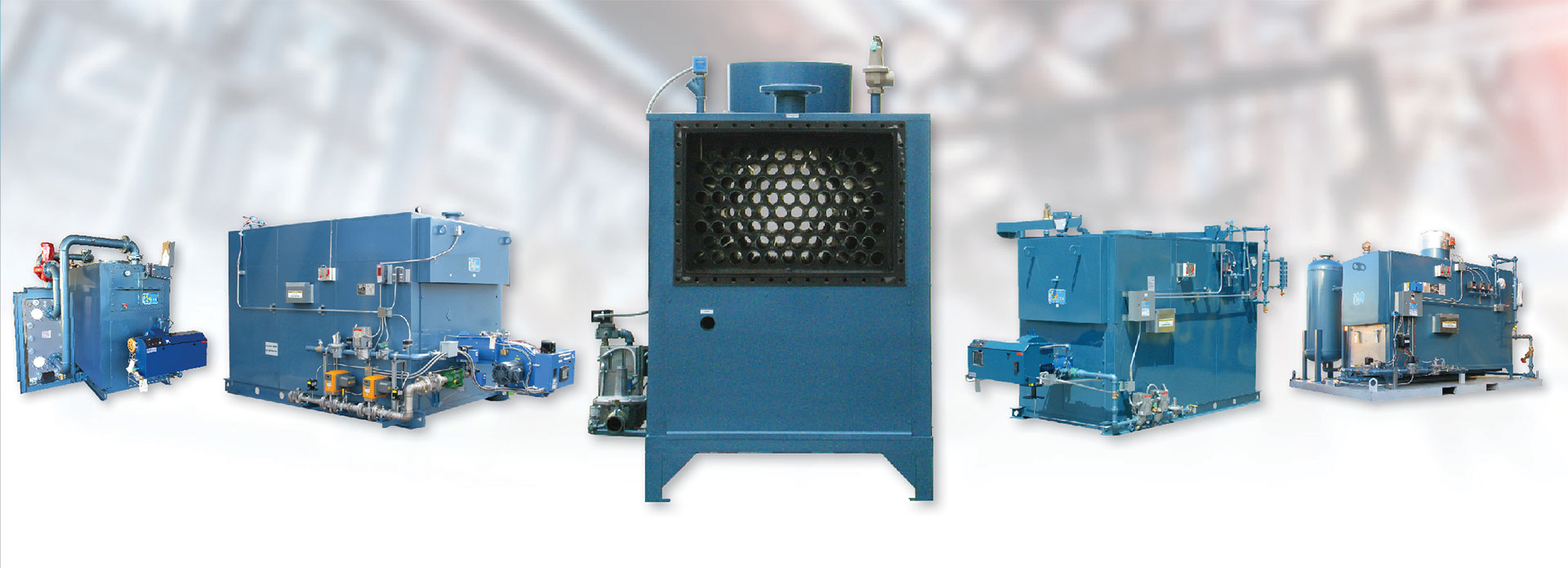
Water Boiler Advantages Low Pressure Steam Boiler Advantages
  • 11-300 Boiler Horsepower.
  • M.A.W.P. to 160 PSI.
  • Supply to Water 240º F (Section I to 400º F).
  • No Minimum flow rate or flow switch required.
  • DP less than 3' head.
  • 25 Year Thermal Shock and Tube Erosion Warranty.
  • 80% to 85% maintainable efficiency models available.
  • Atmospheric or Power Burner Fired.

Click for Full Brochure - PDF | Specification Sheets Click Here

  • 11-300 Boiler Horsepower.
  • M.A.W.P. 15 PSI.
  • Steams in about 5 minutes from a cold start.
  • 99% Steam Quality under steady load conditions.
  • No Steam Baffles or Separators required.
  • Hinged Headplates available for complete and easy waterside access.
  • 25 Year Thermal Shock Warranty.
  • Atmospheric or Power Burner fired.
  •  80% maintainable efficiency.
1. Front Firebox inspection viewport. 12 Rear firebox inspection viewport.
2. Removable front and rear headplates.  Available with hinges for weightless operation. 13. Refractory and insulation.
3. 2" See-through tubes for quick and easy inspection and maintenance. Tubing
 is non-proprietary and widely available from competitive sources.  Replacement
 costs are many times less than proprietary bent tubes or copper finned tubes.
14.
15.
16.
Firebox access door.
ASME rated pop safety valve (steam).
Primary low water cut-off probe.
4. Headplate flanges are drilled and tapped for smooth gasket surfaces.
No flange welded studs to corrode away or interfere with
flange gasket surface clean-up.
17
18.
Steam Supply.
Steam column featuring self-indicating low water cut-off and pump controls.
5. All Hot Water supply connections are ANSI 150# raised face flanged over 2". 19. Steam final pass "superheat" tubes.
6. Round stack outlet with built-in stack supports.  Single stacks available on
 Atmospheric fired boilers up to 7500 MBH input.
20. Heavy duty cast iron upshot burners provide whisper quiet, maintenance free operation.
7. ASME safety relief valve (water). 21. Waterside inspection/blowdown connection.
8. Hot water return connection is standard on top to keep return
water piping from blocking the rear headplate opening.
22.
23.
Surface blowdown connection.
Draft gauge.
9. Float or probe type low water cut-off. 24 Hinged headplates.
10. Air elimination fitting.    
11. Floating head assembly relieves stress caused by "thermal shock"
(tube expansion and contraction).

 
Click for Full Brochure - PDF | Specification Sheets Click Here
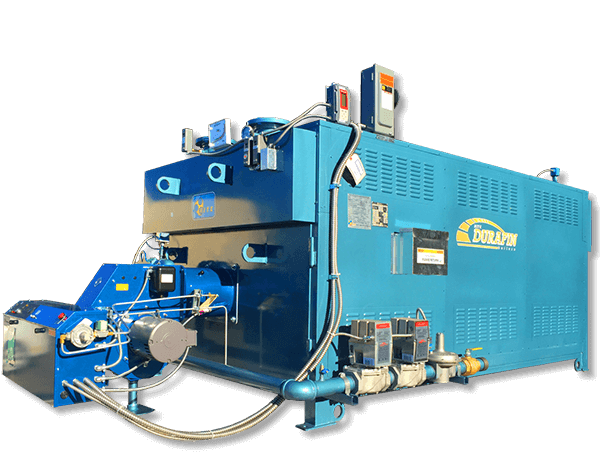
High Pressure Steam & High Temperature
Hot Water Boiler Advantages
 
The Key to Good Heat Transfer 
  •  9.5 - 250 Boiler Horsepower.
  • M.A.W.P. to 325 PSI.
  • Temperatures to 400º F.
  • Steams in about 5 minutes from a cold start.
  • 99% Steam Quality under  steady load conditions.
  • No Steam Baffles or Separators required.
  • Extra Thick Shell and Tubesheets  resist tube loosening and corrosion.
  • Hinged Headplates available for easy waterside access.
  • No Handhole or Manhole Assemblies required.
  • 25 Year Thermal Shock Warranty.
  •  80% maintainable efficiency.
  • Atmospheric or Power Burner Fired.

Our self-baffled tube bundle keeps hot combustion gasses pinballing through the heat exchanger to reduce laminar gas flow and maximize heat transfer efficiency.

“Thermal shock” can happen to any boiler when pressure vessel metal expands (heats up) or contracts (cools down). This is caused by normal burner on-off cycling or by inadvertent slugs of cold feedwater or stratification of varying water temperatures in the vessel itself. Severe mechanical stress can occur if parts of the pressure vessel expand and contract at different rates or if these movements are restrained. Depending on the type of boiler, the end result can range from tubes loosening or warping, tube-sheet-to-shell weld cracks, cast iron cracking or broken stay-rods.

Because the coefficient of expansion of metal increases with temperature, a boiler with clean heat transfer surfaces, such as the tubes, will experience less stress than a similarly constructed boiler that is scaled up. Furthermore, boilers that are designed without expansion joints or made from brittle metals are more susceptible to stress than those which allow for movement and are manufactured using more ductile materials.

So what did the engineers at RITE do to outsmart the forces of thermal shock? They began by designing a pressure vessel that promoted turbulent water flow and natural circulation in order to prevent stratification. Secondly, by limiting the forces of expansion and contraction to a single uniform tube bundle, they eliminated the rigidity and opposing stresses that welded shells, Morison (furnace) tubes and stay-rods impose on other types of boilers. Third, by specifying that the pressure vessel be made of low carbon steel, they made it far more ductile and able to survive sudden pressure and temperature changes than boilers made from cast metal. And by making the tubes straight and cleanable, they made it easy to minimize the expansion rate of the heating surfaces too.

“But with straight tubes, how does RITE accommodate normal tube expansion and contraction?” Good question. After all, a clean steel tube 12 feet long (the longest we use) will grow by about 1/4 inch
in a hot water boiler when going from 60° to 200
° F.*

The following photographs illustrate our engineers’ deceptively simple solution: An expansion joint consisting of a pair of heavy duty lineal slides that allow one of the header boxes to move freely in either direction as the tubes expand and contract. How effective is it? Our normally conservative engineers have written a most liberal 25 year Thermal Shock Warranty around it.


*Based on 100° F average tube temperature above the saturation temperature, coefficient of expansion formula for steel tubes is: .000007 x Length (144”) x T (240° F) = .2419”.


takepart
CONTRACTORS:  Do tough access replacement boiler jobs bring on your disappearing act?  If so, then maybe it's time to consider a less frightening alternative.  For every contractor that had to string a boiler through a window, down a stairwell, around a corner, or into an elevator -- we would like to offer a little magic of our own:

The RITE Take-A-Part.  What makes our design better?  Lighter weight parts for one, because there are no heavy cast iron sections.  Easier because there's no welding required Faster because you take it apart only as far as necessary.  And simpler because the parts arrived assembled - with instructions - so you'll see exactly how they go together.
Click Here to see Video
 

Click for Full Brochure - PDF | Specification Sheets Click Here
Home | Products | Parts | Sales | O&M Manual | Videos | Support | About | Resources | Site Map
Rite Engineering & Manufacturing Corp., 5832 Garfield Ave. Commerce CA 90040 • 562-862-2135 fax: • 562-861-9821
This material may not be reproduced in any form without express permission from Rite Engineering.
Send mail to Web Manager with questions or comments about this web site.
© 2010 Rite Engineering & Manufacturing Corp